


Skeletal – Our Skeleton, Bones, Cartilage
The Skeletal System lays the foundation for our body’s structures and our organs/tissues. The human skeleton is divided into the axial skeleton and the appendicular skeleton, corresponding to the longitudinal access of our body and the remaining bones/structures, respectively. Specifically, the axial skeleton includes notable bones such as the cranium (head), the vertebral column (spine), rib cage, sternum (breastbone), etc. The appendicular skeleton includes the bones of the extremities/limbs and the hip and shoulder girdles.
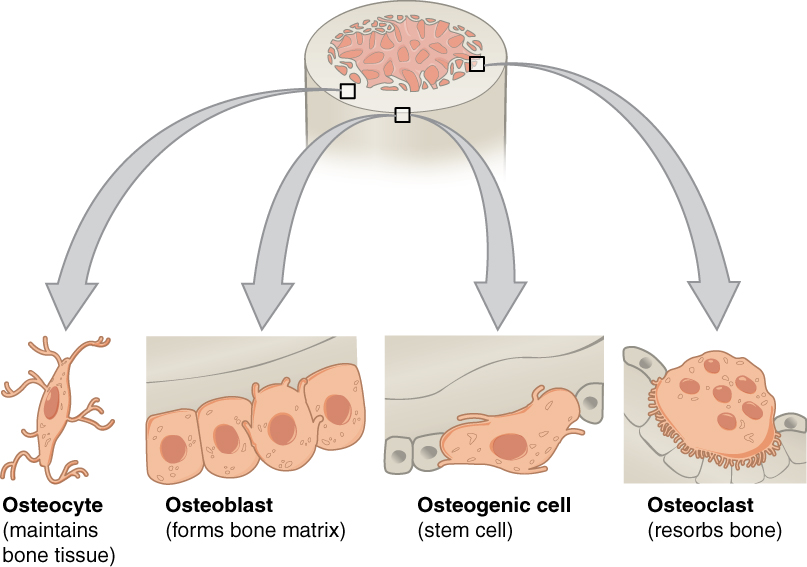
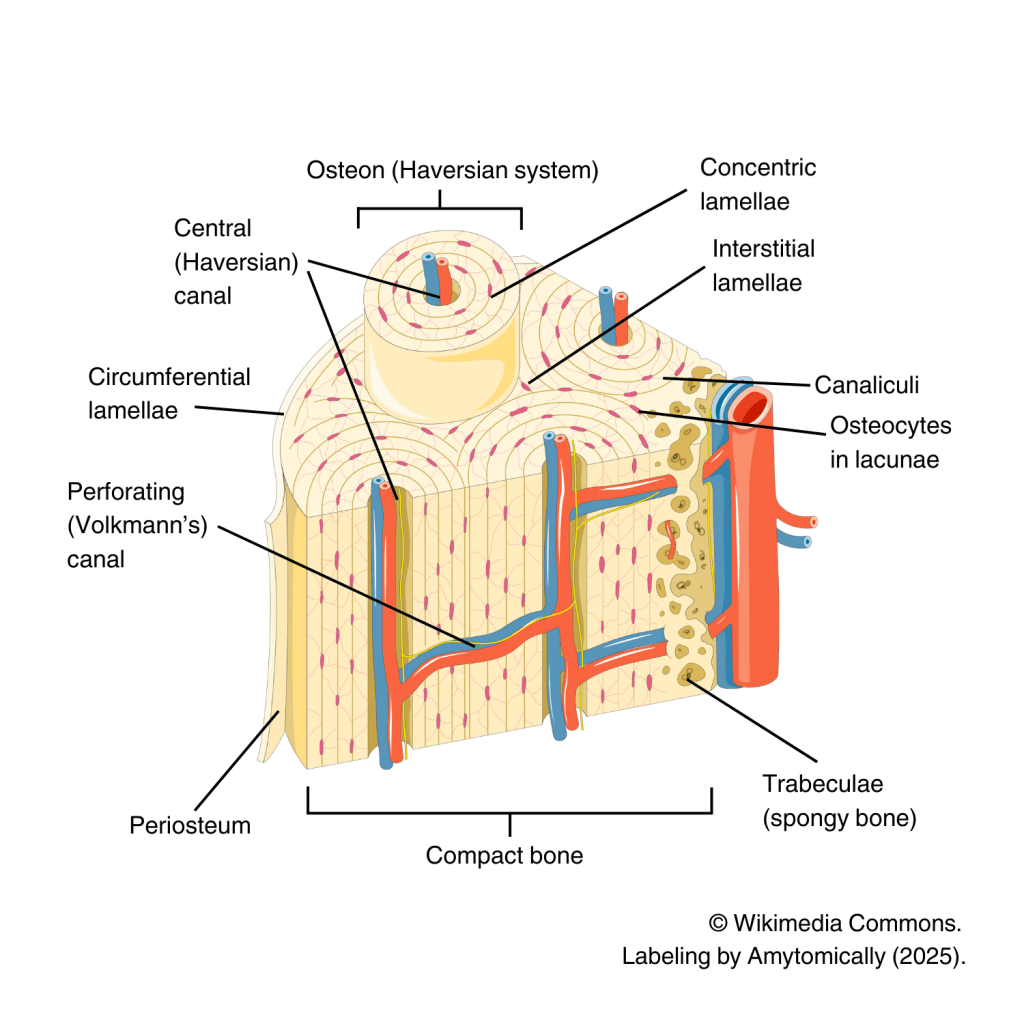
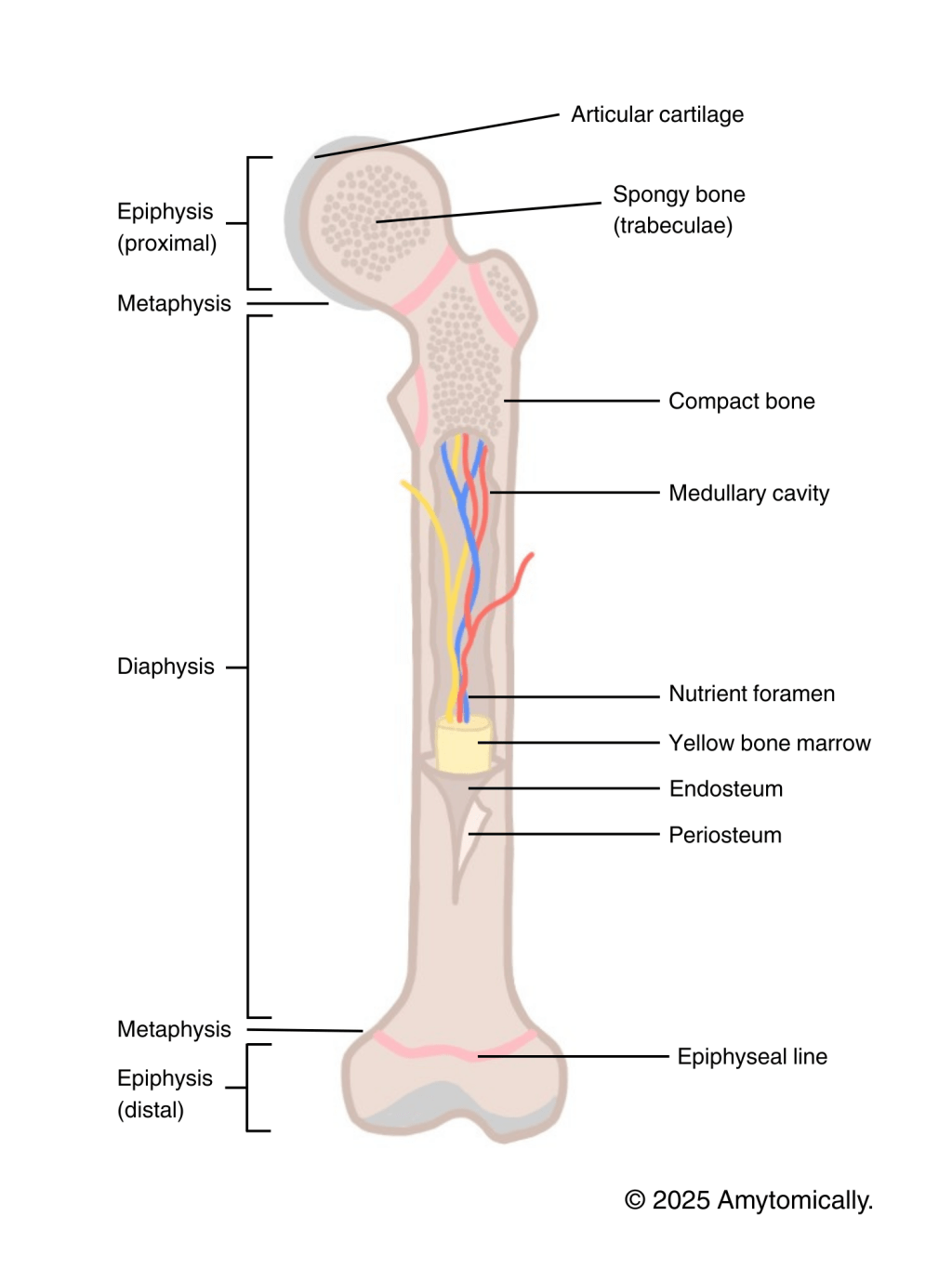
Bones, while differing in their morphology and classification, have similar functions: support, protection, mineral storage, anchorage, red blood cell/RBC production. The most common and widely-discussed bone type is the long bone (Figure 1), with several characteristic features such as the diaphysis, epiphysis, epiphyseal line, and metaphysis. The osseous tissue of bones can vary as well, namely with regard to compact (cortical) and spongy (trabecular, cancellous) bone. Bones are organized via cylindrical osteons, with lamellae and canals for structural integrity and vascularization, containing osteoblasts, osteoclasts, and osteocytes.
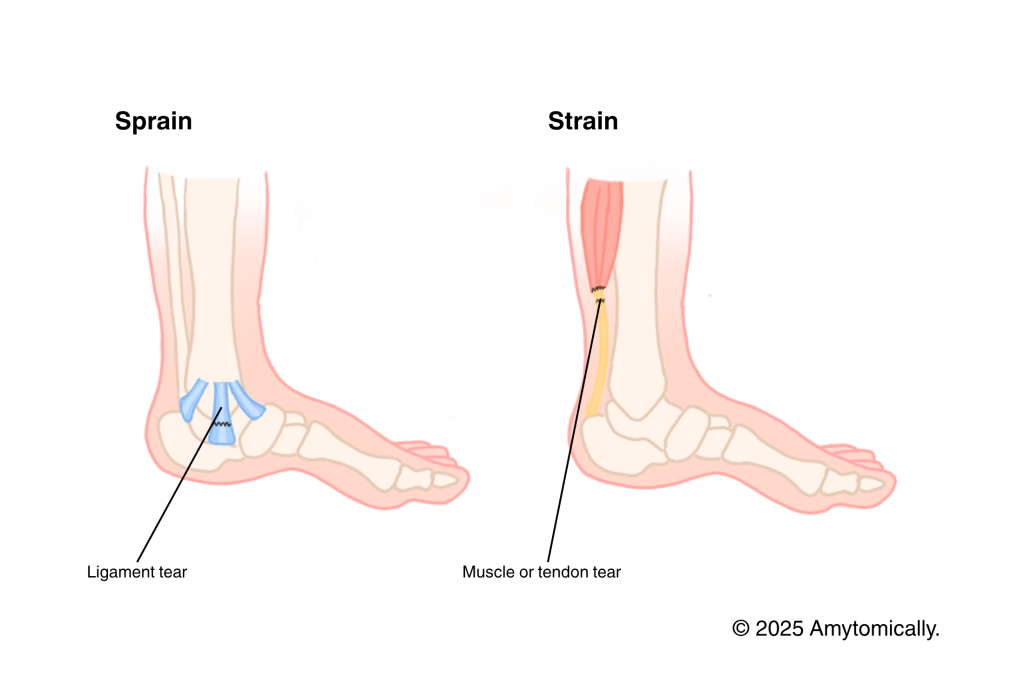
The skeletal system also includes important structures such as joints, cartilage, tendons/ligaments that help to maintain tensile strength and mobility.





 Amytomically