

Nervous – Our Brain, Spinal Cord, Neurons
The Nervous System allows for communication at the level of tissues/organs and cells. It is divided into the Central Nervous System (CNS), which comprises the brain and spinal cord, and the Peripheral Nervous System (PNS), consisting of all nervous tissue outside the CNS. The PNS is further divided into the Autonomic Nervous System (ANS), which regulates our involuntary sympathetic and parasympathetic responses, and the somatic nervous system, controlling our voluntary functions.
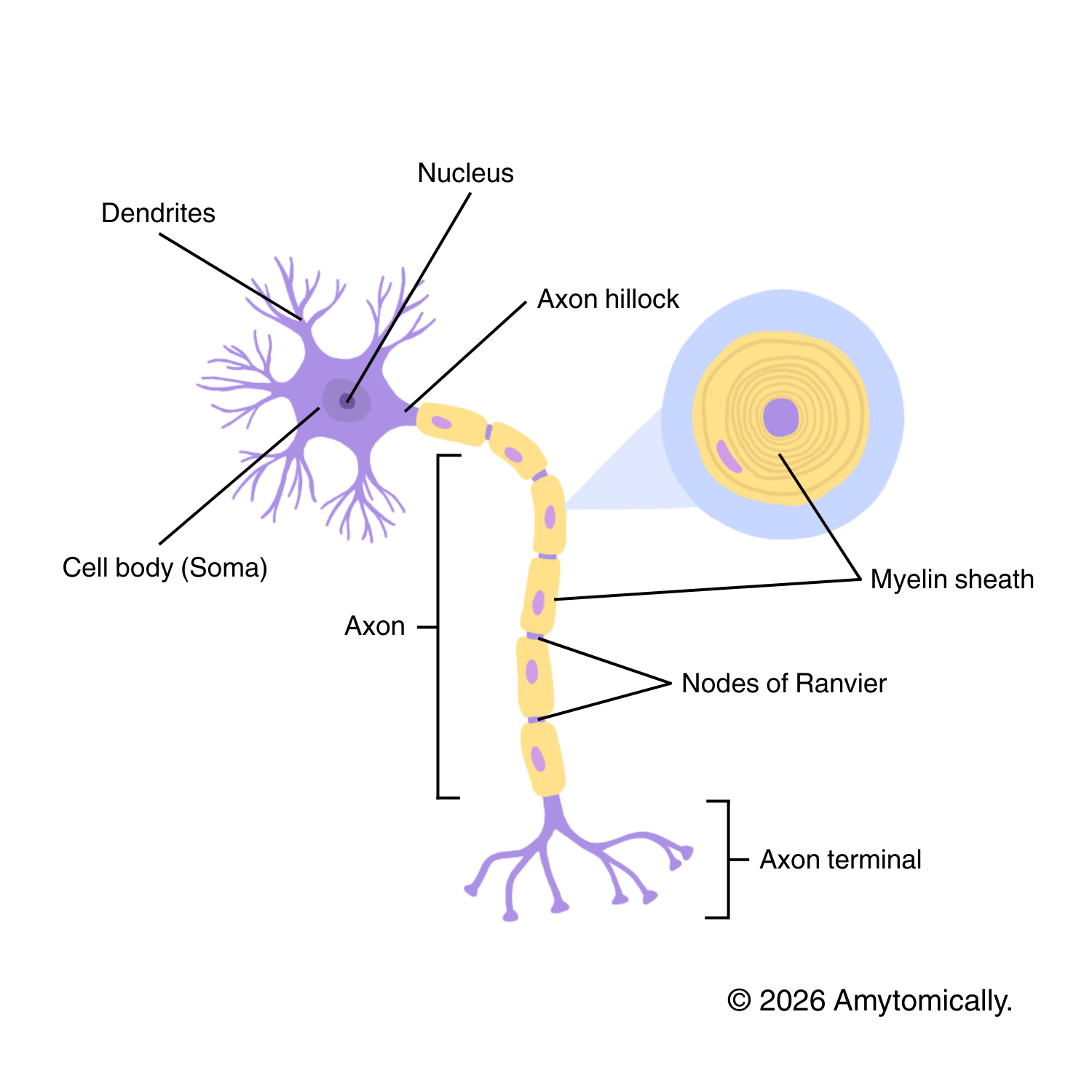
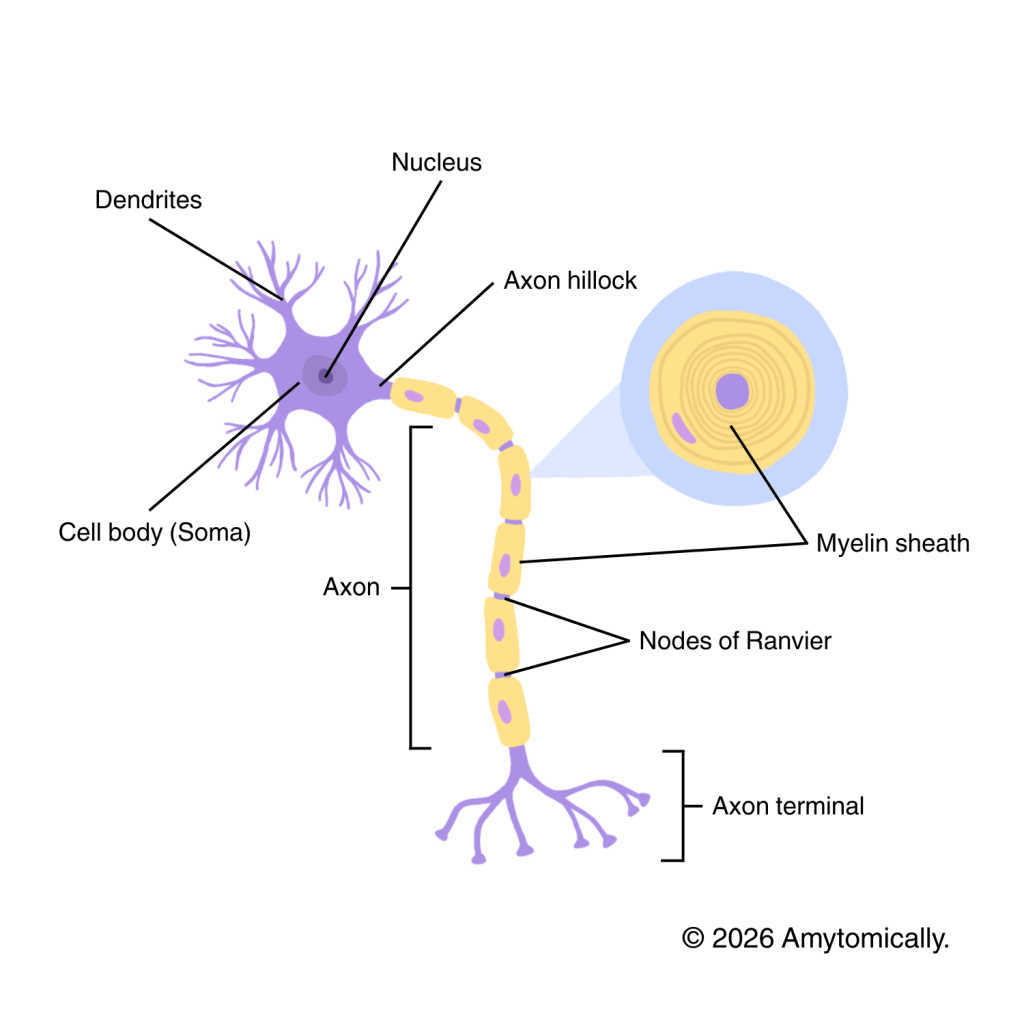
The cellular units of the nervous system are neurons (Figure 1), which communicate via electrical (gap junctions) or chemical (neurotransmitters) synapses. Interneurons are specialized neurons that transmit local impulses, typically serving as the connecting neuron (i.e., local processing or synaptic connection) between the CNS and PNS. Neurons are also assisted by supportive glial cells, which vary depending on nervous division, but include astrocytes, oligodendrocytes/schwann cells, microglia, ependymal cells, and more.
The NS can thus also be organized more generally into afferent and efferent divisions. Afferent neurons or tracts relay sensory information to the CNS or interneurons, and efferent neurons carry motor information to effectors (target organs).
 Amytomically