

Shingles (Herpes Zoster)
General Information
What is it?
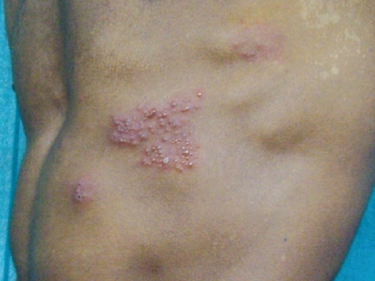
Extremely painful, self-limiting vesicular rash due to the reactivation of varicella zoster virus in dorsal root ganglion nerves; is also known as herpes zoster
Lesions follow dermatomes due to nerve involvement (most commonly affecting thoracic and cervical dermatomes)
Presents with acute neuritis
Risk Factors: older age, immunosuppression, transplant patients, female (increased susceptibility to autoimmune issues), malignancy
Other manifestations
Herpes Zoster Opthalmicus: shingles infection of the eye (and potentially skin of neighboring areas) that can progress into blindness
Herpes Zoster Oticus: infection of potentially all parts of ear (Ramsay Hunt Syndrome Type II: if comes with facial paralysis)
Evaluation:
- Primarily clinical: fever, malaise, burning pain, typical distribution and characteristics of lesions
- Tzanck smear of vesicular fluid
- Direct fluorescent antibody testing
- PCR for viral DNA
- Serology to assess immunity (igM or igG against VZV)
Pathophysiology:
- Virus replicates in neural cell bodies, and synthesized virions are then carried to the skin innervated by the respective ganglions, causing inflammation and blistering and extreme pain
- Specific involvement of Gasserian/trigeminal nerve ganglion
Phases of infection:
- Pre-eruptive (pre-herpetic neuralgia): nerve pain prior to vesicle eruption in affected dermatomes
- Accompanied by headache, malaise, myalgia, fatigue
- Over the course of a few days
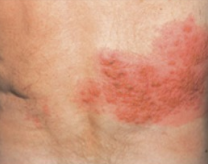
- Acute eruptive: lesion transformation from macules to painful herpetiform vesicles (will ulcerate and crust over) on an erythematous base
- Lesions do not cross midline since are localized to a dermatome, so an abrupt/sudden stop in lesions should be found
- 2-4 weeks
- Chronic phase: post-herpetic neuralgia (no eruption)
- Persistent, recurring pain and/or paresthesias that lasts longer than 4 weeks
- Higher rates in elderly
- Can extend from months to years
Treatment & Prevention
If <72 hours: antiviral therapies (valacyclovir or acyclovir)
If <72 hours: treatment is not very effective, but can employ topical antibiotics (mupirocin), opioids or nerve blocks for pain, or other medications to treat complications
Preventative measures:
- Zoster vaccine if already had VZV/chickenpox: Shingrix
 Amytomically
Leave a comment