

Chicken Pox (Varicella-Zoster Virus)
General Information
What is it?
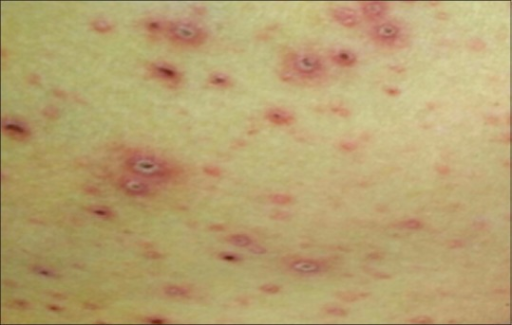
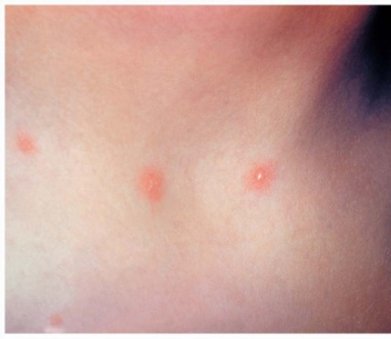
Extremely pruritic vesicles on erythematous base, caused by dsDNA varicella zoster virus (human herpes virus-3)
Long incubation period of 15-21 days
Usually self limiting after 2-4 weeks
Risk Factors: steroid usage (can increase virulence), immunocompromised, pregnancy
Evaluation:
- Primarily clinical: pre- and post-eruptive symptoms (see below)
- Direct fluorescent antibody testing
- PCR for viral DNA
- Serology to assess immunity (igG against VZV)
Anatomical Blurb: Common Primary Lesions
- Macule: flat discolored spot (<1cm)
- Patch: small, raised bump that is slightly palpable(<1cm)
- Plaque: large, raised lesion with flat top (>1cm)
- Vesicle: fluid-filled blister with clear/serous fluid (<1cm)
Phases of infection:
- Airborne/aerosal spray etiology
- Nasopharyngeal entry (eye or respiratory mucosa)
- Lymph node invasion (after ~2-4 days)
- Viral entry into blood stream
- Infection of reticular endothelial system
- Secondary viremia (~7-9 days)
- Eruption of characteristic skin lesions
- Pre-eruptive symptoms: fever, pharyngitis, appetite changes, oral cavity lesions
- Eruptive symptoms: macules → papules → vesicles → crusted macules/papules (see above); are not successive eruptions, but are polymorphic (different stages of healing, do not occur concurrently)
- Spreads to local sensory nerves and remains dormant (see bottom) with potential reactivation
Treatment & Prevention
If <12 years: self limiting, resolves spontaneously (excellent prognosis in children)
If >12 years: valacyclovir/acyclovir within 24-48hr of rash onset
Preventative measures:
- MMRV Vaccine (mumps, measles, rubella, varicella)
↓
If varicella zoster lays dormant in dorsal root ganglion nerves, it can progress into…


Leave a comment