

Cellulitis
Info & Pathophysiology
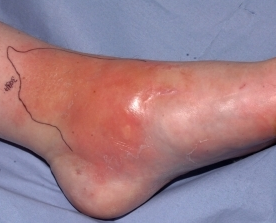
What is it?
Deep dermal infection that can extend to subcutaneous adipose tissue; primarily affects lower extremities due to diminished blood circulation
Indolent and slow onset
Risk Factors: obesity, immunosuppression, chronic vascular insufficiency (especially in recurrent cellulitis), lymphatic insufficiency, other skin afflictions (e.g. tinea infections), animal bites
Clinical presentation: poorly demarcated erythematous raised rash with palpation tenderness; no abscess or purulent discharge; can see regional lymphadenopathy but generally localized symptoms; can become scaly during recovery process
Pathophysiology:
- Primarily s. aureus infection (purulent cellulitis) or beta-hemolytic streptococci or MSSA (nonpurulent cellulitis)
- Infection can also be caused by:
- Freshwater environment: Aeromonas hydrophila
- Seawater: Vibrio vulnificus
- Hot tub: Pseudomonas aeruginosa; associated with puncture wounds in foot/hand
- Fish/poultry handling: Erysipelothrix
- Bacterial colonization induces epidermal immune response →production of antimicrobial peptides and keratinocyte proliferation → GABHS can produce virulence factors (pyrogenic exotoxins A, B, C, F)
Differential Diagnosis: Erysipelas vs. Cellulitis
Cellulitis
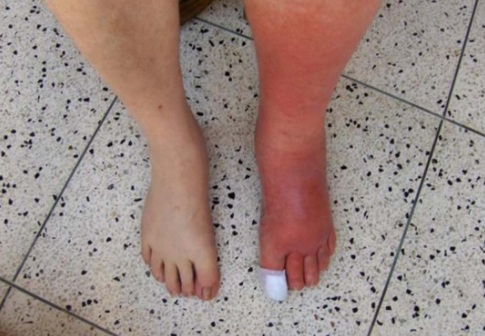
Infectious agent: Strep and S.aureus in equal incidence
Infection depth: infection extends all the way to deeper dermis and subcutaneous adipose tissue
Course of onset: indolent onset, slow development over a few days
Lesion characteristics: can be purulent (s.aureus) or nonpurulent (beta-hemolytic streptococci or MSSA), poor demarcation, no abscess or purulent discharge
Erysipelas
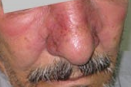
Infectious agent: most common agent is Group A Strep
Infection depth: limited to upper dermis and superficial lymphatics
Course of onset: acute and abrupt onset
Lesion characteristics: always nonpurulent, clear demarcation and often raised
If involves ear, will present with Milian’s Ear Sign
Similarities
- Both are bacterial skin infections
- Both are erythematous, edematous, warm/hot to touch
- Almost always unilateral in lower extremities
- Similar risk factors (see above)
- Diagnosis is mostly clinical
Treatment
Oral antibiotic therapy max 5 day treatment; good progression if treated within 48h (before infection further invades subcutaneous tissue)
Nonpurulent cellulitis
- Cephalexin/PO or cefazolin/IV
- IF MSSA: mupirocin, retapamulin
Purulent cellulitis
- Need to cover for MRSA: clindamycin, tetracyclines, vancomycin
Hydration, cold compresses or other compression therapy to reduce swelling
 Amytomically
Leave a comment